Buying a Puppy or Kitten

Our Oy as a puppy.
As you drive along, you see a sign on the side of the road: "Purebred Chihuahadoodledors, $100 a piece, AKC registered!!" $100! That's a good deal! Plus, the kids are chanting "Puppy, Puppy!!" in the back seat.
So, how do you know if these "purebred" puppies are the real deal? First things first: There is no such thing as a purebred doodle anything.
The Pre-Purchase Checklist
Before you stop the car, follow these steps:
Step One: Think over if you really want a puppy and are ready to deal with whining, pooping, peeing, and biting.
Step Two: REALLY think over if you want a puppy.
Step Three: Consider whether you want the ADULT version of that puppy in 8–12 months.
Step Four: Find a good breeder.
Red Flags: The Breeder
Choosing a breeder is much like a relationship—ignore the red flags at your own risk!
1. The Parents & Environment
The Rule: You must see the parents and where they live.
Why: Parents pass on genetic issues (heart murmurs, cleft palates, hernias). If the dad has an undescended testicle, your puppy likely will too.
The Risk: If you don't see the parents, for all you know, the dad could have been Cujo.
2. The Age (Under 8 Weeks)
The Rule: Never buy a puppy younger than 8 weeks.
Why: Puppies need to learn "right and wrong" from their siblings. Separating them too early causes behavioral nightmares.
The Vaccines: A vaccine given at 5–6 weeks by a breeder is NOT the same as a veterinary exam at 8 weeks.
3. "Rare" Colors
The Truth: "Rare" colors are as real as unicorns. They are a marketing tactic.
The Risk: If you see "Blue" in the name (Blue Frenchie, Blue Pitbull), you are almost guaranteed to have a dog with expensive skin allergies.
4. AKC Certification
The Reality: Being AKC registered does not mean the dog is healthy. It just means the owner paid a fee.
Resource: Here is a fun PDF listing every breed and their diseases. Consider it some light evening reading.
5. OFA or PennHIP Certification (The Real Standard)
What is it? The Orthopedic Foundation for Animals tests for genetic issues like hip dysplasia.
The Test: If you ask a breeder about OFA testing and they say "Huh?", RUN.
6. The "Rescue" (Pet Stores/Flea Markets)
The Truth: These are almost always puppy mill dogs.
The Cost: As fans of The Good Place know, buying a puppy from a pet store will cost you points. You are not "rescuing" them; you are funding the supply chain.
7. The Shelter (The Hero Choice)
The Pro: Shelter pets are vetted, vaccinated, and fixed.
The Secret: There are tons of purebreds in shelters. Shop around!
How to Choose a Cat
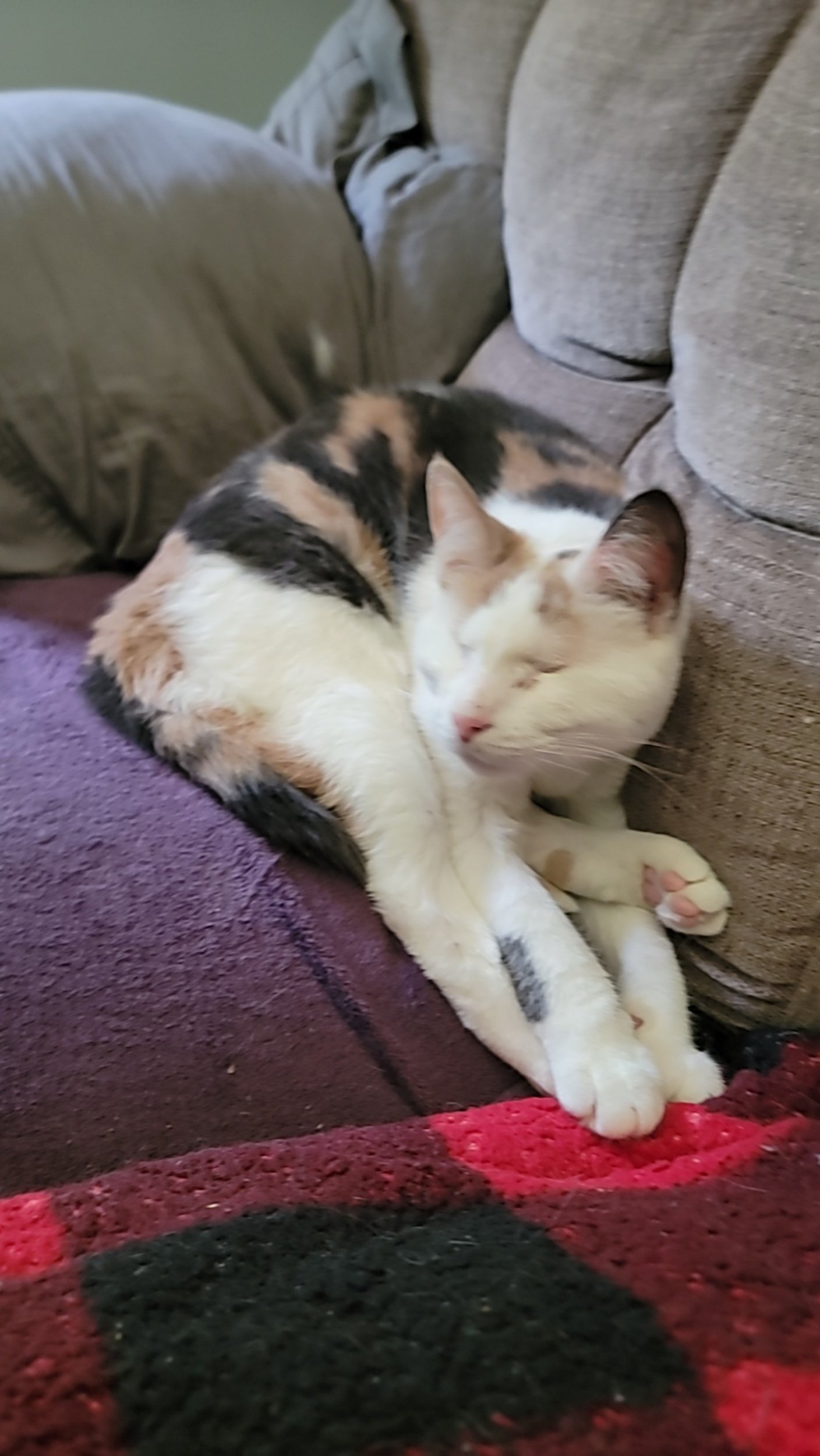
Our cat Stevie
(A comparative guide)
Go to the nearest dumpster, shelter, or swamp.
Find a cat.
Name it "Chonkosaurus Hecks" or something similar.
Congrats, you have a new cat!
Note: It is not a purebred Maine Coon. It is never a purebred Maine Coon.
Note: It probably won't like you, but it is officially in charge of your household now.
Summary: A Personal Example
We recently got a livestock guardian dog named Oy (for you Stephen King fans).
The Process: We waited 6–8 months on a waitlist.
The Vetting: His parents were OFA tested. He was vetted, dewormed, and vaccinated by a licensed vet.
The Result: A healthy, fluffy, adorable guardian.
Final Thought: Please take your time. We would much rather see a healthy puppy visit than a "genetic abomination" (which happens more often than we would like). Once you bring them home, check out my guides on Puppies and Kittens.The sellers do not let you see the parents or the environment they are raised in.