Cost of Veterinary Medicine

Everything is expensive right now.
Hulu just increased their price, so even watching Bob's Burgers is getting ridiculous (just kidding, I stole the subscription from my mother-in-law like a true American). Don't even get me started on the price of eggs!
Like everything else, veterinary medicine is not cheap.
"Yes, this is going to be a touchy subject. But I am going to explain exactly where your money goes, why my student loans look like a mortgage, and how you can actually save money."
1. The Business of Saving Lives
The "Rich Vet" Myth
From a business aspect, the veterinary field is a "hot mess."
The Debt: New vets often graduate with $400,000+ in debt at 6%+ interest.
The Overhead: Approximately 50% of your bill goes just to keeping the lights on (rent, utilities, equipment).
The Staff: Another 20–30% goes to paying the staff (technicians, assistants, receptionists) who are often criminally underpaid for the work they do.
The Leftover: That leaves a very small slice of the pie for the actual doctor.
The Corporate Shift
Most clinics are no longer owned by "Dr. Pol" types.
The Players: Mars (yes, the candy bar company) is the largest owner of veterinary practices.
The Trade-off: While corporate ownership has its cons, it allows veterinarians to focus on medicine rather than calculating payroll on Sunday nights.
2. The Price Tag Face-Off: Human vs. Dog
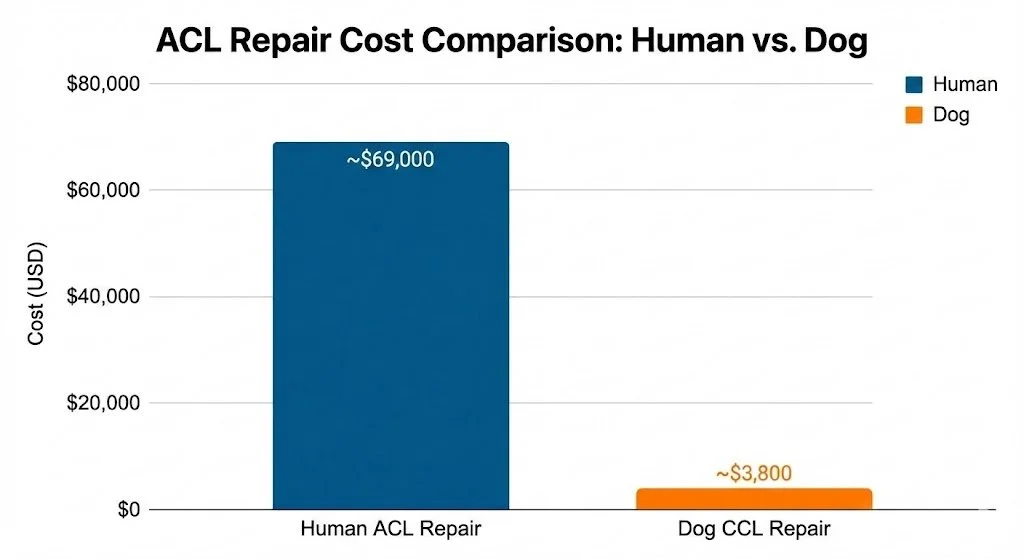
People often suffer from "sticker shock" because human healthcare costs are hidden by insurance. Let’s compare the exact same surgery: ACL Repair.
The Takeaway: We perform complex medical procedures using the same technology as human hospitals for roughly 1/10th of the cost.
3. How to Save Money (The "Insider" Tips)
I saved the best for last. Here is how to keep your bill down without compromising care.
1. Be Honest About Your Budget
The Fix: Tell us immediately if funds are tight.
Why: We can prioritize. We might skip the "gold standard" $300 blood panel and start with a cheaper targeted test. If you wait until checkout to say "I only have $20," you are contributing to my rapid hair loss.
2. Get Pet Insurance
The Reality: I was recently stuck with a $4,000 bill for my own dog’s knee surgery.
The Fix: Get insurance before they get sick. Once they are diagnosed, it is a "pre-existing condition" and you are out of luck.
3. Ask for Estimates
The Rule: Never be afraid to ask, "How much will that cost?"
Our View: We do not mind! We would rather you know the price upfront than have a heart attack at the front desk.
4. Be Nice (Seriously)
The Stats: The suicide rate in veterinary medicine is 2x that of the medical profession and 4x the general population.
The Effect: You would be amazed at how far being a decent, patient human will get you. (Jerks rarely get discounts; nice people often do).
4. The "Menu": Rough Estimates
Note: These are estimates for a rural clinic and vary widely by location.
Routine Spay: $200 – $500
Pyometra Surgery: $1,000 – $3,000
(This is the emergency surgery you may need if you DON'T spay).
Distemper/Parvo Vaccine: ~$35
Parvo Treatment: $500 – $2,000+
(See the pattern? Prevention is cheaper).
Dental Cleaning: $250
Dental with Extractions: $250 – $3,000
Conclusion
The most challenging part of pet ownership is realizing you will outlive them.
Since we haven't found the fountain of youth, our job is to make their time with you as healthy and happy as possible.
When you decide to bring a pet into your family, it is your responsibility to know your financial limits, so we can help you navigate the "messy" business of keeping them alive.
Huge thank you to Dr. Andrea Walker, Tayler Eggleston, and Lauren Alsvig for all their support with the blog and helping me write more better.
Here are some more resources:
https://topdogtips.com/pet-ownership-costs-rise/
Stoewen, D. L. (2015). Suicide in veterinary medicine: Let’s talk about it. The Canadian Veterinary Journal, 56(1), 89-92. https://doi.org/https://www.ncbi.nlm.nih.gov/pmc/articles/PMC4266064/