Dentistry: The Root of the Problem
“The Smell Test Have you ever cuddled up with your beloved pet, only to catch a whiff of breath that could peel the paint off the walls?
The Reality: Dental health is vital, but often ignored.
The Goal: To get to the root of the matter (pun intended) before your pet develops "sewer mouth."
1. The Anatomy
The Numbers
Dogs: 42 adult teeth.
Cats: 30 adult teeth.
The Timeline: Most adult teeth are present by 6 months of age.

Before routine dental cleaning.
The Progression Just like us, plaque hardens into tartar.
Tartar: Creates a safe haven for bacteria.
Gingivitis: The gums become inflamed and angry.
Abscess: Eventually, the gum erodes, creating pockets of purulent pus at the tooth root.
Note: Next time Fluffy kisses you, remember the word "pus."
2. Prevention: The "I Won't Brush" Reality
I know you don't want to brush their teeth. The Gold Standard: Brushing
The Ideal: Daily brushing with pet toothpaste is the best way to prevent tartar.
The Reality: 99.9% of owners (statistic made up, but accurate) don't do it.
The Alternatives If you aren't going to brush, try these:
Vetradent Wipes: My go-to alternative.
VOHC Approved Treats: The Veterinary Oral Health Council has a list of products that actually work.
The Schedule: Brushing 3 times a week maintains healthy gums. If they already have gingivitis, you need to do it daily.
Start brush training when your pet is a puppy/kitten. They may not need it now, but if you desensitize them to it now with positive reinforcement, it will save you time and money (and potentially losing a finger) in the future.
3. Common Excuses (and why they fail)
"I brush once a month."
The Rebuttal: Can you imagine only brushing your own teeth once a month? I hope you don't kiss your mother with that mouth.
"He doesn't seem painful!"
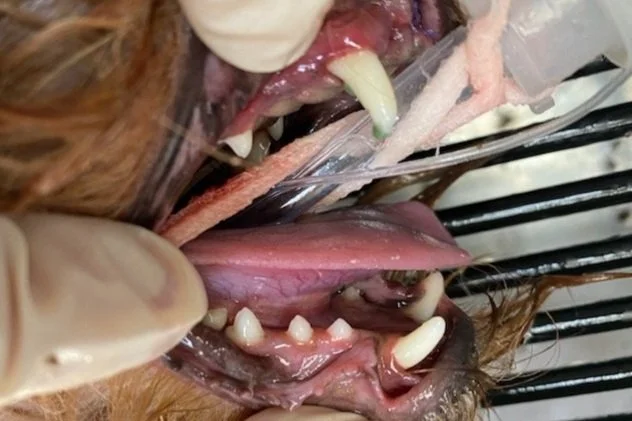
After dental cleaning and extractions.
The Rebuttal: Dental pain is a chronic, dull ache. Pets are stoic and can't talk.
The Truth: Just because they are eating doesn't mean they aren't hurting. They have to eat to survive.
"But he chews on bones."
The Rebuttal: I am willing to bet 4 out of 5 dentists did not recommend a cow femur as toothpaste. Bones often break teeth rather than clean them.
4. The Procedure: What happens?
If their breath smells like a "three-week dead salmon," it is time for a professional cleaning.
The Anesthesia: Unlike humans, pets must be fully asleep for a safe, thorough cleaning.
The X-Rays: We take radiographs to see the 60% of the tooth that lives under the gumline.
The Extractions: If a tooth is infected, we pull it.
The Rule: It is better to have no teeth than painful, infected ones.
Recovery: Most pets eat better once the painful tooth is gone. That is what canned food is for!
5. Weird Cat Things
Cats are weird beings who get strange diseases, probably out of spite.
Tooth Resorption: The body attacks the tooth root, causing it to dissolve and disappear. It is incredibly painful.
Stomatitis: An immune-mediated reaction where the cat becomes allergic to its own plaque. The gums become bright red and angry.
Summary: Stick to your Gums
A routine dental cleaning (a few hundred dollars) is much cheaper than oral surgery for a mouth full of rotten teeth (thousands of dollars).
The Stat: Routine dental care can extend a pet's life by 2–3 years.
The Goal: Stick to your gums now, and your pet will thank you later.
Resources
Veterinary Partner: Dental Care (Less puns, more facts).