Your Pet’s Diet
The "What Should I Feed?" Question Your veterinarian has successfully navigated the entire appointment: answered every question, ran all diagnostics, administered vaccines, and maybe even survived a nail trim. But just as you head for the exit, the question that guarantees a longer discussion comes up:
"Oh, and what should I be feeding Daisy?"
The "Detroit Pizza" Philosophy Imagine if 90% of your diet was just one food. I, for one, could probably get behind a Detroit-style all-meat pizza for the majority of my meals. However, unlike me, your four-legged roommate needs a carefully balanced diet.
While your pet can be fine eating one food for life, selecting the wrong diet without knowing it can cause harm.
6 Things to Consider When Choosing a Diet
1. Cost: Marketing vs. Research
Grabbing the cheapest food isn't usually the best decision. But as someone with two dogs and two cats, I get it—it gets expensive.
The Hidden Cost: The chiropractic bill after lugging that 50-pound bag to your car doesn't help either.
The "Premium" Trap: The most expensive option isn't always best, either. Many companies spend more on marketing than they do on nutritional research.
2. The AAFCO Standard
The Association of American Feed Control Officials (AAFCO) establishes nutritional standards for "complete and balanced" pet foods.
What they do: Set the rules for what is considered balanced.
What they don't do: Test or regulate the feed (that is up to the individual states).
Real-world example:
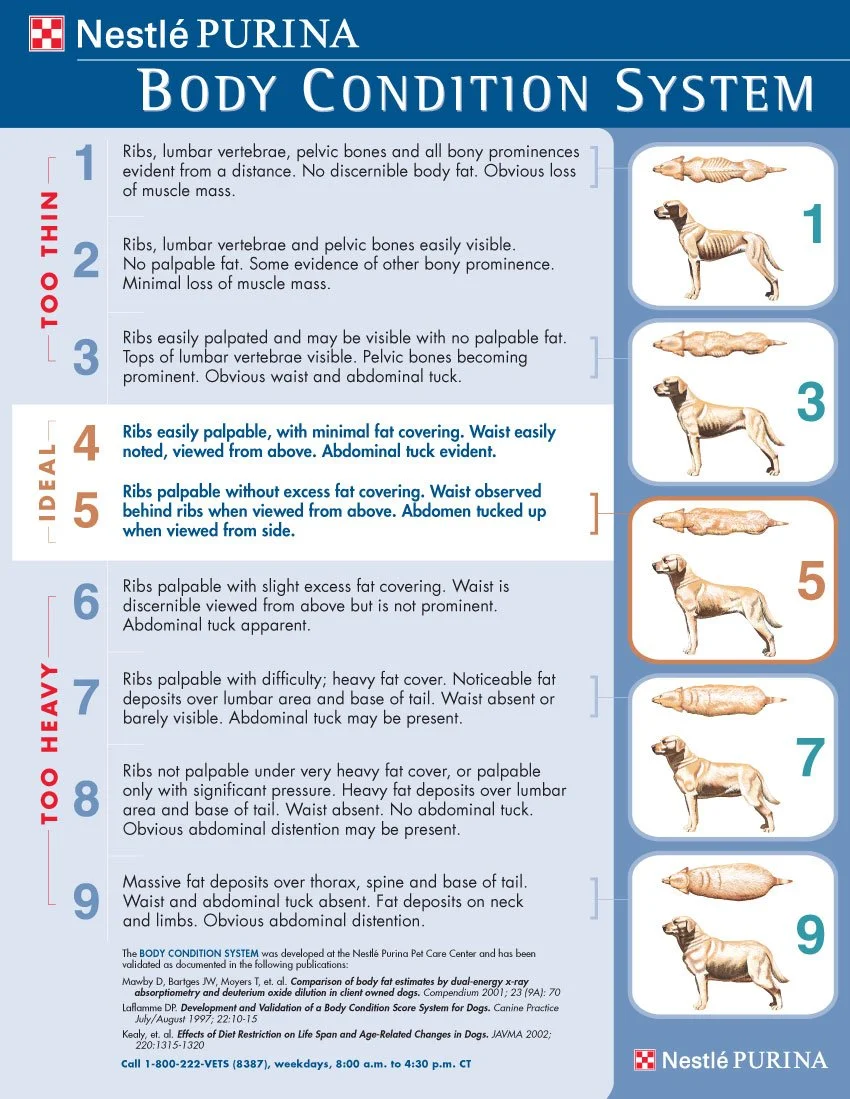
"The pizza crusts that your husband slips under the table to Fido are NOT AAFCO approved, and yes, they are the reason your Labrador is a 9 out of 9 on the body condition score."
3. The Truth About Allergies
My parents' "Springador," Rocco, was itching constantly until we addressed his diet.
The Culprit: Animals are usually allergic to the protein source (chicken, beef), not the grain.
Grain-Free Warning: Grain-free food has been linked to heart disease and is generally not recommended.
Advice: Keep it simple (Chicken/Beef). If an allergy develops, we can switch to a "novel protein."
4. Testing & Expertise
If your pet is living off one diet for life, that diet should be formulated by a Board-Certified Veterinary Nutritionist.
The Standard: This requires about three decades of schooling (and who knows how much student debt).
Check Your Brand: Use the Pet Nutrition Alliance Chart to see which companies actually employ full-time nutritionists with Ph.Ds.
5. Taste & Marketing Myths
Your pet would happily drink toilet bowl water, pre- or post-flush. Fido doesn't care if the food has "real chunks of carrot."
The Label Trick: Ingredients are listed by weight before dehydrating. Since meat has a lot of water, it weighs more initially. Once dehydrated for the kibble, the actual protein content drops.
The Hard Truth:
"My Rachel Ray diet only has the best ingredients according to the label." No ma'am, you are just gullible.
6. Medicated Diets
These are specific tools to dissolve stones, manage diabetes, or limit how many times you take Fido out at 3 AM because he has the runs.
Pros: Can significantly improve quality of life.
Cons: Usually more expensive and not always for long-term use.
A Note on Trust
As with all veterinary matters: take our advice, or don't. It is up to you. All we want is what is best for your animal.
Full Disclosure: I do not get any money from pet food companies (yet?), and my $350,000+ student debt should tell you that the purpose of becoming a veterinarian was not for the money. We are just here to help.