Spaying and Neutering: The ‘Nuts’ and Bolts
Balls, testicles, kahunas, gonads. They can be hotter than them or cold as them. They are swear words, a term for having bravery, and even put on trailer hitches.
But, they should not be on your pet.
Every veterinarian will have different recommendations. There are countless scientific articles on the subject, but I will base this article on what I have seen practically in the clinic.
The Boys: Neutering (Orchiectomy)
Feline Neuter (The Tomcats)
When: Generally around 5–6 months old.
Why: Neutering at this age helps prevent spraying in the house before it becomes a habit.
The Vibe: It keeps them closer to home and generally makes them lazier (which we like in house cats).
Canine Neuter (The Good Boys) This is where opinions vary, but we all agree on one thing: they don't need their testicles and will not miss them.
Small Breeds: 6–8 months.
Large Breeds: 8–12 months (waiting allows for better bone growth).
The Risk: Intact males want to run away looking for... female dogs.
The "Game of Chicken": A majority of "Hit By Car" cases are intact males.
My take: If you live next to US-131 and have an unfenced yard, I would rather treat your dog for arthritis later in life than see them on the emergency table for losing a fight with a sedan.
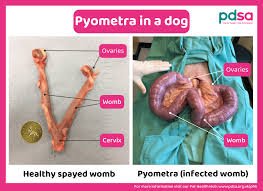
The difference between a healthy uterus and one with a pyometra.
The Girls: Spaying (Ovariohysterectomy)
When: I recommend 6 months (before the first heat).
Why before the heat? Even with the best precautions, accidents happen. Unintended litters are common, and females in heat become escape artists.
The Scary Reality: Pyometra A pyometra is a fatal infection of the uterus that requires emergency surgery.
The Cost: This surgery is difficult and dangerous.
"The cost of that surgery will have you saying: 'Ope, shoulda collected more pop cans to return to Meijers.'" (Floridians, take a minute to wrap your head around that sentence).
The Severity: To quote Veterinary Partner:
"There is nothing routine about a pyometra spay... the pyometra spay typically costs five to ten times as much as a routine spay."
"But I Want to Breed..."
Generally, breeding is not recommended unless you are doing it to better the species.
The Reality: Approximately 6.5 million (and counting) companion animals enter U.S. shelters every year. If you are breeding for "fun" or "profit," I recommend volunteering at a shelter first.
The Breeder's Checklist: If you are going to breed, you should be able to check these boxes:
Health Testing: You have checked for breed-specific diseases (See OFA Breed Guide).
Certification: The animal is AKC-certified with lineage for both parents.
Emergency Funds: You are financially and mentally prepared for a C-section if things go wrong.
Education: You have read resources on Responsible Breeding.